Virtual Fitness Classes for Kids: Are They a Good Fit?
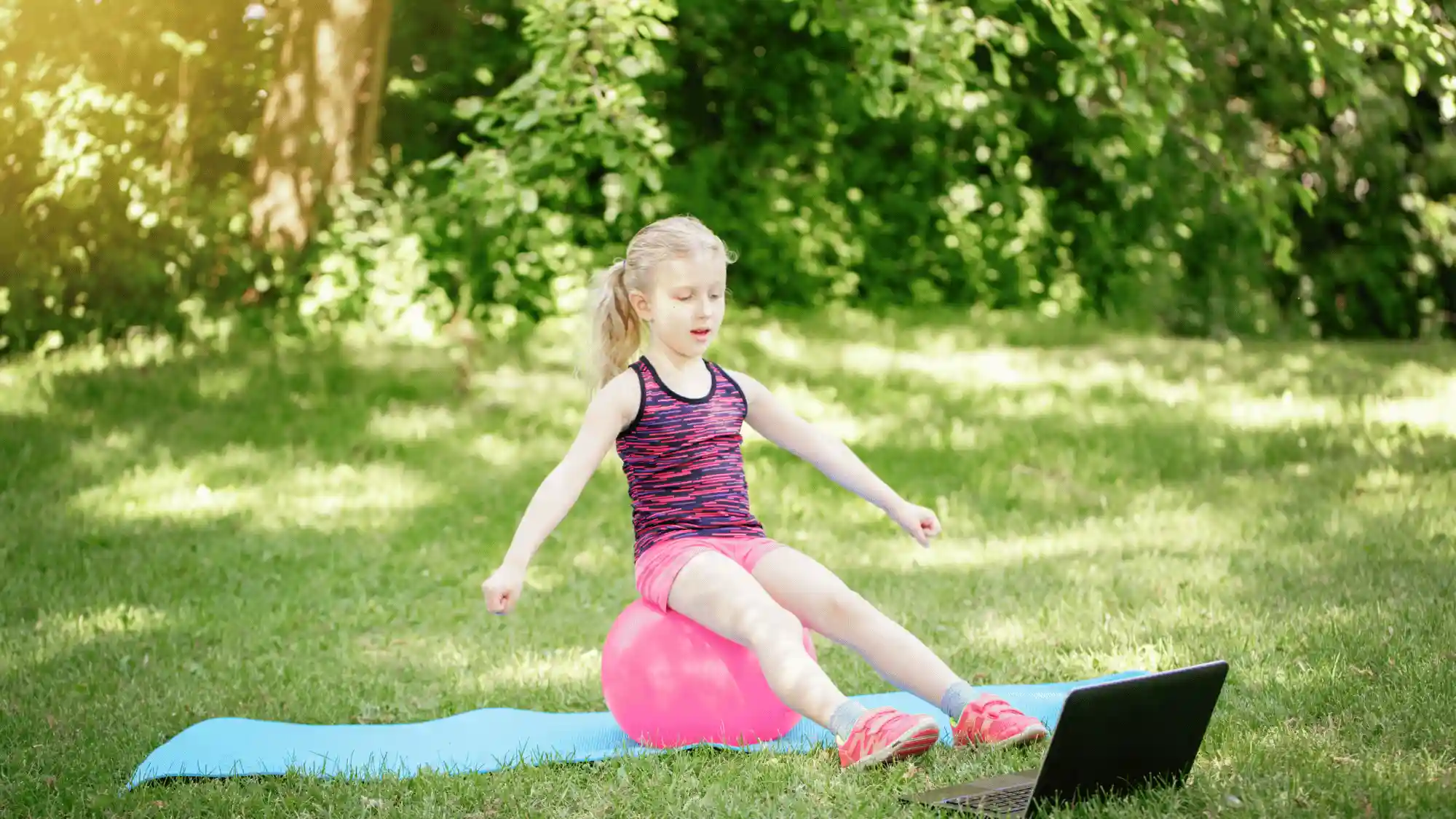
Virtual fitness classes for kids can give families a practical way to add structured movement without driving to another practice, class, or gym. For children who enjoy exercising at home, need more flexibility, or benefit from repeating instructions at their own pace, online fitness can become a useful part of an active routine.
Kenzie’s Kids offers online fitness training through the Adapt Fit App, with programs created for kids, teens, parents, and individuals who benefit from adaptive movement options. Because workouts can be accessed from home, families can fit movement around school, homeschool schedules, travel, and other commitments.
Online training is not automatically the best option for every child. The right decision depends on attention, motivation, age, ability, supervision needs, and what your family expects the program to accomplish. This guide explains what to consider before choosing a virtual fitness option.
Also Read
- Benefits of At-Home Fitness for Kids
- Customized Fitness Programs at Home
- Importance of Regular Movement for Kids
TL;DR
Virtual fitness can work well for children who benefit from flexible scheduling, a familiar home environment, clear demonstrations, and structured activities they can complete without traveling to a facility. Parents should look beyond convenience and consider whether the program is age appropriate, engaging, adaptable, easy to follow, and realistic for the child to use consistently. Online exercise programs for children are most useful when they support an active lifestyle rather than becoming another passive screen activity. Families should also consider how much supervision their child needs and whether the program provides appropriate options for different ability levels.
Key Takeaways
- Virtual fitness can make structured movement easier to fit into busy schedules.
- Children should actively participate rather than simply watch exercise videos.
- Programs should match the child’s age, ability, attention span, and fitness experience.
- Flexible, on-demand training can work particularly well for homeschool families and children with changing schedules.
- Beginner and adaptive options make online training accessible to more families.
- Most children do not need a full home gym to participate.
- Parents should create enough space for safe movement before starting a workout.
- Progress tracking and achievable goals can improve consistency.
- Online fitness should complement everyday movement, outdoor play, recreation, and other physical activities.
What Virtual Fitness Classes for Kids Actually Look Like
The term virtual fitness can describe several different formats.
Understanding the differences helps parents choose an option that matches how their child learns.
Live Virtual Classes
Some programs use scheduled video calls where an instructor teaches participants in real time.
These programs can provide:
- A fixed schedule
- Live instruction
- Immediate feedback
- Social interaction with other participants
The downside is that families still need to be available at a specific time.
On-Demand Fitness Programs
Other platforms provide structured workouts families can access when their schedule allows.
Kenzie’s Kids uses this model through the Adapt Fit App. Children can follow guided workouts at home without needing to join a class at a specific hour.
This format can be useful when schedules change from week to week.
A child might complete a workout:
- Before homeschool lessons
- After school
- Between activities
- During a family fitness period
- While traveling
- On days when outdoor activity is limited
Online Training Should Still Be Structured
A random collection of exercise videos is not the same as a thoughtfully designed fitness program.
Parents should look for clear instruction, appropriate movement selection, realistic progression, and activities that fit the intended age and ability level.
Structure gives children direction instead of leaving families to decide what workout to search for every day.
Which Children May Benefit Most From Online Fitness?
Online programs can serve different purposes depending on the child.
There is no single profile of the ideal participant.
Kids Who Prefer Exercising at Home
Some children feel more comfortable learning physical skills in a familiar environment.
They may feel hesitant in:
- Large group classes
- Busy gyms
- Competitive programs
- Unfamiliar facilities
At home, they can concentrate on the movement instead of worrying about who is watching.
Families With Busy Schedules
Travel can turn a 30-minute activity into a much larger time commitment.
Online training removes the commute.
For a family balancing school, work, sports, appointments, and multiple children, that difference can make regular fitness more realistic.
Homeschool Families
Virtual training can provide a structured movement component within the homeschool schedule.
Instead of trying to create a new PE lesson every day, parents can designate certain times for guided activity.
The flexibility also allows movement to happen when the child tends to have the most energy.
Children Who Like Repetition
In an on-demand environment, children can repeat familiar activities and build confidence before progressing.
For some children, knowing what to expect reduces anxiety and makes participation easier.
When Virtual Fitness May Not Be Enough by Itself
Online fitness can be useful without needing to replace every other form of movement.
Children still benefit from broad physical experiences.
Children Need Real-World Movement Too
Daily activity can include:
- Outdoor play
- Bike riding
- Swimming
- Walking
- Recreation
- Sports
- Playground activity
- Family activities
Online sessions can add structure, but children should not spend the rest of the day sitting simply because they completed a workout.
Some Kids Need More Direct Coaching
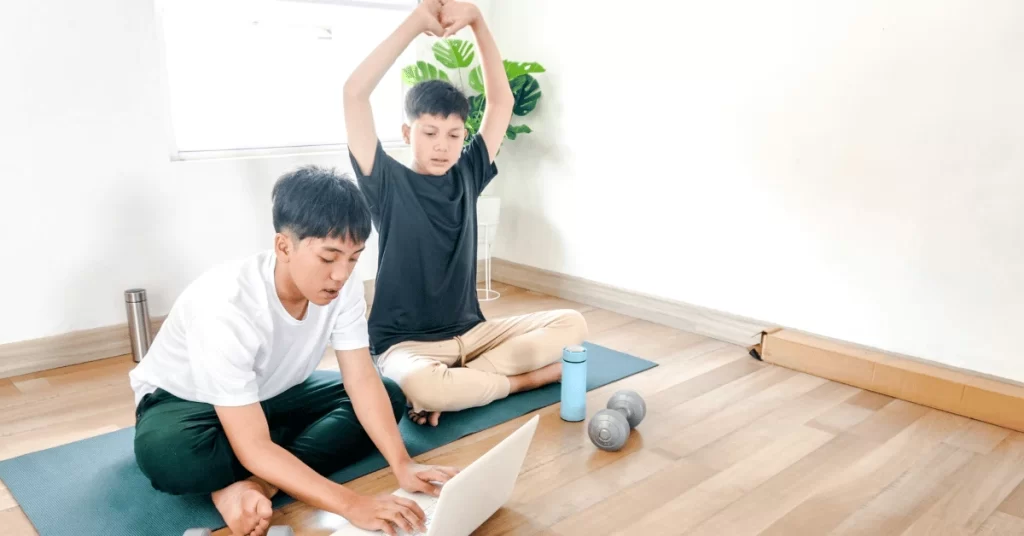
A child who needs frequent hands-on correction, close supervision, or substantial assistance learning movements may benefit more from in-person training.
Parents should consider how independently the child can follow instructions.
Social Opportunities Still Matter
Some children enjoy the independence of home workouts. Others thrive when movement includes friends, teammates, or coaches.
Families do not need to choose one format exclusively.
A child might use virtual fitness during the week while participating in swimming, sports, recreational activities, or family outings at other times.
The best routine is often a mix of options that the child can maintain.
What Parents Should Look for in Online Exercise Programs for Children
The quality of online programming varies.
Before enrolling, evaluate the program itself rather than choosing based only on convenience.
Age-Appropriate Instruction
Children should not simply follow an adult workout with fewer repetitions.
Programming should reflect:
- Developmental stage
- Coordination
- Strength
- Attention span
- Movement experience
Younger children may benefit from shorter activities and simple demonstrations. Older children and teens may be ready for more structured strength and conditioning.
Clear Visual Demonstrations
Children need to understand what they are being asked to do.
Look for movements that are demonstrated clearly and instructions that avoid unnecessary technical language.
Beginner Options
A child should have somewhere appropriate to start.
If every workout assumes advanced coordination or fitness, beginners may become frustrated quickly.
Progressions and Modifications
A useful program should provide ways to adjust movements.
For example, a strength exercise might offer:
- A basic bodyweight version
- A slower version
- A chair-supported option
- A more challenging progression
These options allow more children to participate meaningfully.
Activities With a Clear Purpose
A workout should not simply make a child tired.
Parents should be able to recognize goals such as:
- Coordination
- Strength
- Cardiovascular activity
- Mobility
- Balance
- General movement
Purposeful programming makes progress easier to understand.
Why Flexibility Can Improve Consistency
One of the biggest advantages of online training is control over timing.
That matters because the best exercise plan is ineffective if the family cannot maintain it.
Build Fitness Into Existing Routines
Instead of creating an entirely separate fitness schedule, families can connect movement to predictable parts of the day.
For example:
Homeschool family: Complete a workout before lunch three days per week.
Traditional school schedule: Use a short session after homework and before dinner.
Busy sports family: Use online fitness on days without team practice.
Weekend routine: Complete a family workout before other activities begin.
The exact schedule matters less than making it repeatable.
Consistency Does Not Require Perfection
A missed day should not derail the entire plan.
Flexible access allows families to move a session rather than abandoning it.
That can be particularly valuable during:
- Travel
- Schedule changes
- School breaks
- Weather disruptions
- Busy work weeks
The National Institute of Diabetes and Digestive and Kidney Diseases encourages families to make physical activity part of everyday life, involve children in active family activities, and focus on forms of movement children can enjoy.
For online fitness, the practical lesson is to build the program into family life rather than expecting family life to revolve around the program.
Top 5 Signs Virtual Fitness Could Be a Good Fit for Your Child
Parents can use these questions as a quick decision framework.
1. Your Child Is Comfortable Following Visual Instruction
If your child can watch a demonstration and attempt the movement, virtual training may work well.
Children who need constant physical prompting may need additional support.
2. Your Family Needs More Scheduling Flexibility
On-demand programs remove the need to arrive at a facility at a fixed time.
That can make consistent fitness easier for families with changing schedules.
3. Your Child Prefers a Familiar Environment
Home training can reduce distractions and social pressure.
This may help children who are hesitant in large or competitive settings.
4. Your Child Needs More Consistent Movement
Online training can provide structure on days when no sport, PE class, or other activity is scheduled.
5. Your Family Wants to Be Active Together
A shared platform can make it easier for children, teens, and parents to build an active household routine.
The strongest sign is not simply that virtual fitness sounds convenient. It is that the format solves a real barrier that has been preventing consistent movement.
How Kenzie’s Kids Uses Online Training Differently
Kenzie’s Kids designed the Adapt Fit App around the idea that one household can include several different fitness needs.
It is not limited to one type of participant.
Dedicated Kids Workouts
The kids section uses upbeat, guided workouts focused on bodyweight movement and foundational abilities such as:
- Strength
- Speed
- Coordination
- General fitness
The goal is to provide structure without requiring children to train like adults.
Parent and Teen Programs
Parents and teens can access their own strength and cardio programming through the same platform.
That makes the app more useful for households that want fitness to become a shared routine.
Adaptive Fitness Options
Kenzie’s Kids also includes adaptive programming for individuals who benefit from slower pacing, modified exercises, chair-based options, or different movement strategies.
That reflects the same individualized philosophy used throughout Kenzie’s Kids services.
Families interested in these options can explore the Adapt Fit App and Kenzie’s Kids online training to see how the platform supports different ages and abilities.
Progress Tracking
Tracking completed workouts and milestones can help users see that consistency produces progress.
For children, this should remain encouraging rather than becoming another source of pressure.
The purpose is to recognize participation and improvement.
Does Virtual Fitness Mean More Screen Time?
This is a reasonable concern.
Children already use screens for entertainment, schoolwork, communication, and learning.
Virtual fitness uses a screen differently because the screen prompts physical activity rather than passive consumption.
The Child Should Be Moving
If the child spends most of the workout sitting and watching, the program is not accomplishing its primary purpose.
Once instructions are understood, attention should shift from the device to movement.
Keep the Device Functional
Set up the screen where the child can see the demonstration without needing to hold the device.
A tablet, television, or computer placed at a safe viewing angle usually works better than a phone held during exercise.
Do Not Treat It as a Replacement for Outdoor Activity
Online fitness can provide useful structure while still leaving room for outdoor play and real-world recreation.
The MedlinePlus Exercise for Children resource notes that children benefit from regular activity and highlights options ranging from sports and walking to biking, dancing, and yoga.
Virtual workouts can be one option within that larger mix.
What Equipment Do Families Need?
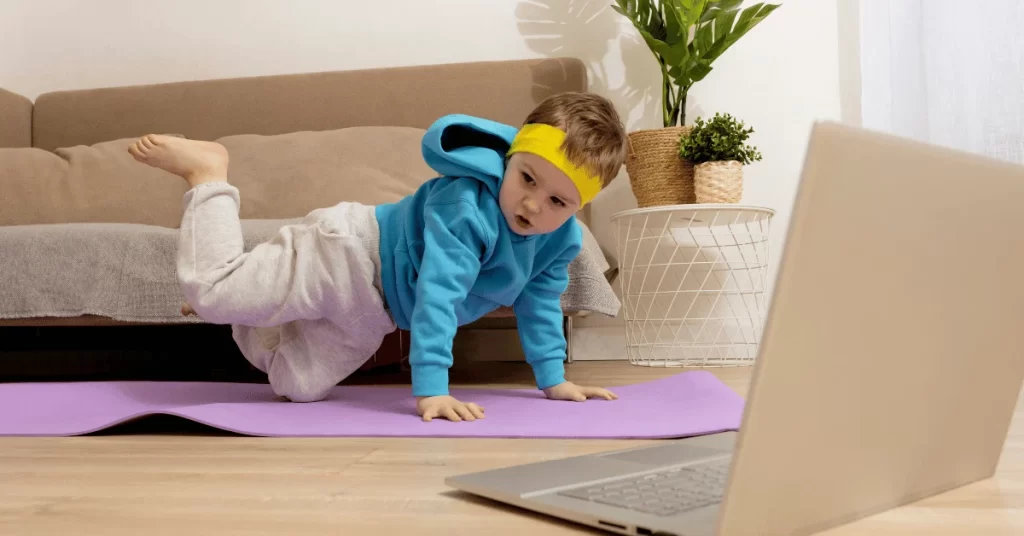
One advantage of children’s virtual fitness is that effective movement does not require an elaborate home gym.
Start With Space
Before worrying about equipment, identify a safe movement area.
Children should have enough room to:
- Extend their arms
- Step in multiple directions
- Get on and off the floor
- Move without hitting furniture
Clear loose objects before beginning.
Many Workouts Can Use Bodyweight
Bodyweight activities can develop:
- Strength
- Coordination
- Balance
- Mobility
- Endurance
The Adapt Fit App includes kids programming focused on bodyweight movement.
Simple Equipment Can Add Variety
Depending on the program, families might eventually use:
- Resistance bands
- Light weights
- Cones
- Agility tools
- A chair
Parents should follow the workout instructions and use equipment appropriate for the participant.
More equipment does not automatically make a workout better.
How Parents Can Support Virtual Fitness Without Becoming the Coach
Children should develop some independence, but parents still influence whether online fitness becomes a lasting routine.
Help Establish the Schedule
Set a predictable time for training so the child does not need to decide from scratch every day.
Prepare the Environment
Make sure the workout area is clear and the device is positioned safely.
Encourage Without Micromanaging
Parents do not need to correct every movement from across the room.
Let the instructor guide the session unless the child needs help or there is an obvious safety issue.
Ask About the Experience
Afterward, ask questions such as:
- What activity did you like?
- Was anything confusing?
- What felt easier today?
- Was anything too difficult?
- What would you like to do again?
These questions help parents understand whether the program remains a good fit.
Creating a Balanced Weekly Routine
Virtual training works best as part of a broader movement plan.
A simple week might include:
Monday: Online fitness session
Tuesday: Outdoor play or recreation
Wednesday: Online workout
Thursday: Bike ride, walk, sport, or active family activity
Friday: Rest or light movement
Saturday: Family activity, swimming, hiking, or recreation
Sunday: Rest and preparation for the week
This is only an example.
The correct schedule depends on the child’s age, other activities, goals, and overall health.
Families should avoid turning every free period into scheduled exercise. Children still need unstructured time and recovery.
FAQs
What are virtual fitness classes for kids?
They are structured exercise programs children can access through a digital device. Depending on the provider, they may be live classes or on-demand workouts that children complete at home.
Who is online fitness training best for?
It can work well for children, teens, homeschool students, families with busy schedules, beginners, and children who prefer exercising in familiar environments.
Are virtual workouts beginner friendly?
They can be. Parents should specifically look for programs that provide introductory options, clear demonstrations, and appropriate modifications.
Does my child need exercise equipment?
Not necessarily. Many children’s workouts rely primarily on bodyweight exercises. Some programs may incorporate simple equipment such as bands or light weights.
Can parents and kids exercise together?
Yes. Family participation can make activity more social and help establish consistent household routines.
Can children with adaptive needs use online fitness programs?
Some platforms include adaptive options. Parents should review the program carefully to make sure the pacing and modifications match their child’s individual needs.
Can homeschool families use virtual fitness for PE?
Yes. Online programs can provide structured movement within a homeschool schedule. Parents should still include other physical activities and determine how the program fits their educational requirements.
How do families access Kenzie’s Kids online workouts?
Kenzie’s Kids provides its online programming through the Adapt Fit App, which includes workouts for children, teens, parents, and adaptive participants.
Conclusion
Virtual fitness classes for kids can be a practical option when they make movement more accessible, consistent, and enjoyable. They are particularly useful for families who need scheduling flexibility, homeschool students who need structured activity, children who prefer familiar environments, and households that want fitness resources available in one place.
The key is choosing a program that does more than put exercise videos on a screen. Look for age-appropriate instruction, purposeful programming, modifications, clear demonstrations, beginner options, and a format your child can realistically continue using.
Online training should also remain one part of a broader active lifestyle. Outdoor play, recreational activities, family movement, sports, and everyday physical activity still matter.
Kenzie’s Kids offers online exercise programs through the Adapt Fit App for kids, teens, parents, and individuals who benefit from adaptive options. For families looking for flexible fitness support without being limited by location or a fixed class schedule, virtual training can provide a useful structure for building healthier movement habits.
About the Author
This article was written by the Kenzie’s Kids team, specialists in personalized fitness for children and families. Kenzie’s Kids focuses on building confidence, coordination, strength, and healthy movement habits through mobile and online fitness experiences designed around different ages and abilities.
Serving families through in-person programs in Phoenix, Tucson, and Indianapolis as well as online training through the Adapt Fit App, the team works to make purposeful movement more accessible and practical for everyday family life. Learn more about Kenzie’s Kids and the people behind its programs on the About Kenzie’s Kids page.